
Wedding transportation is one of those details that can seem simple until the schedule starts coming together.
A typical wedding may involve a hotel, a ceremony venue, a photo location, a reception, and an evening departure. Different groups may also need transportation at different times. The couple may travel separately from guests, while family members and members of the wedding party may have their own schedules.
Planning transportation early helps turn all of those separate movements into one coordinated plan.
Start With The Full Wedding Timeline
The first step is to map out the wedding day before choosing vehicles.
Write down the ceremony location, reception venue, hotel addresses, photography locations, and any other destinations that require transportation. Then add the expected pickup and arrival times for each group.
This gives you a better picture of the transportation required.
For example, the wedding party may need to arrive before guests, while the couple may leave the reception later than everyone else. Some guests may also need transportation back to their hotels at the end of the evening.
Thinking about the whole timeline makes it easier to decide whether you need one vehicle, several vehicles, or a combination of private and group transportation.
Decide Who Actually Needs A Ride
Not every wedding guest necessarily needs organized transportation.
Some people may drive themselves, while others may stay at the venue or arrange their own transportation. The people who do need transportation should be divided into groups according to where they are staying and where they need to go.
This can help prevent two common problems: booking too little capacity or paying for vehicles that are only lightly used.
For larger groups, wedding shuttle service can be a practical solution because several guests can travel together. Smaller groups or VIP passengers may prefer an executive sedan or luxury SUV.
Choose Vehicles Based On The Group
Passenger count is important, but so is the amount of luggage and personal belongings involved.
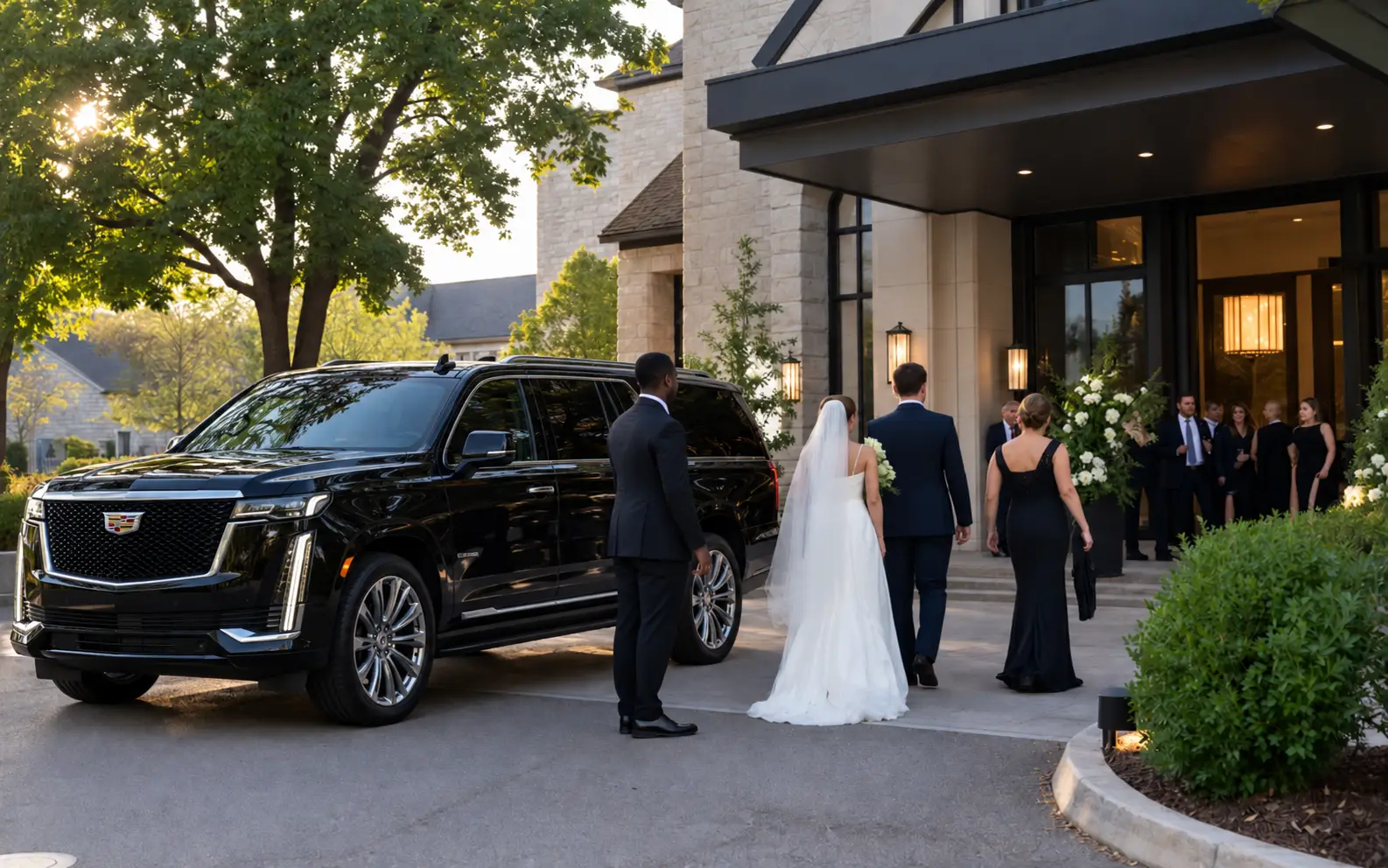
A Mercedes-Benz S-Class may work well for the couple or a small number of VIP guests. A Cadillac Escalade ESV or Chevrolet Suburban can accommodate more passengers and belongings while maintaining a premium setting.
For larger wedding parties or groups of guests, a Mercedes-Benz Sprinter Van can keep more people together instead of dividing them among several smaller vehicles.
It is always better to discuss the actual passenger and luggage requirements before confirming the vehicle.
Keep Hotel Transportation In The Plan
Hotel transportation is often overlooked during wedding planning.
Guests may come from different parts of Minneapolis or from outside Minnesota, which means the hotel becomes one of the most important transportation points of the day.
Consider where the majority of guests are staying and whether transportation needs to run between that hotel and the ceremony or reception venue.
A private limo service Minneapolis couples arrange for guests can help simplify the movement between locations, especially when the venue is outside the immediate downtown area.
Build In Extra Time
Wedding schedules are rarely perfect down to the minute.
Guests may take longer to gather than expected. Photos may run over. A ceremony may start late. Traffic can also affect travel times between venues.
It is better to leave reasonable space between scheduled movements than to create an itinerary with no room for unexpected changes.
When discussing wedding transportation in Minneapolis, make sure the transportation provider knows the actual event schedule rather than only the final destination. This makes it easier to build a realistic reservation.
Separate The Couple From Guest Transportation When Necessary
The couple and the guests do not always need the same transportation plan.
The bride and groom may need a private sedan or SUV for photography, dinner, and the reception. Guests may be better served by a larger vehicle that runs according to the event schedule.
Keeping these transportation needs separate can make the overall plan much easier to manage.
It also gives the couple more flexibility during the parts of the day that involve photography, private moments, or changes in schedule.
Consider The End Of The Night
Transportation planning should not stop at the reception.
Think about where guests are going after the event. If most people are returning to the same hotel, group transportation can be arranged around that destination. If guests are staying in several locations, the plan may need to account for different drop-off points.
The same applies to the couple. Their final destination may be a hotel, home, or airport rather than the reception venue.
A clear departure plan helps avoid the situation where everyone starts looking for a ride at the same time.
What To Confirm Before The Wedding
Before finalizing your wedding transportation Minneapolis plan, confirm the pickup locations, number of passengers, vehicle types, event venues, expected timing, and final destinations.
It is also helpful to know who is responsible for communicating updates on the wedding day. One point of contact can make last-minute changes much easier to handle.
Most importantly, make sure everyone who needs transportation knows when and where they should meet their vehicle.
Good Wedding Transportation Is Mostly About Planning
The best wedding transportation usually does not draw attention to itself.
Guests know where to go, the vehicles arrive according to the schedule, the couple can focus on the celebration, and transportation remains organized as the day moves from one location to another.
Whether you need a private sedan for the couple, an SUV for family members, or a wedding shuttle service for guests, planning the transportation around the actual wedding timeline can make a major difference.
A well-planned transportation schedule lets everyone spend less time wondering “How are we getting there?” and more time enjoying the day.